Henry's Gingerbread Scones
Shared on 9/29/2025
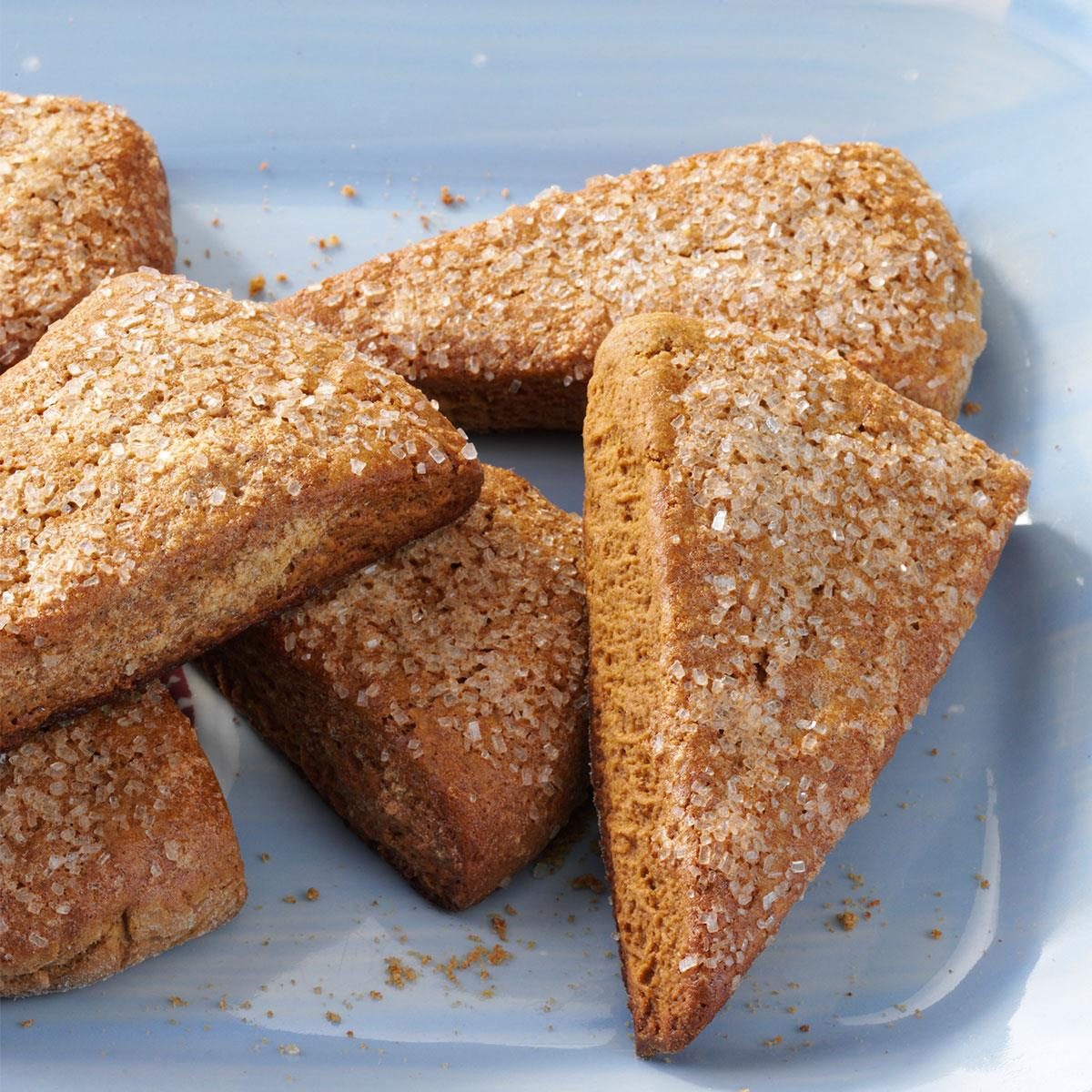
Ingredients
- 250 g (2 cups) all-purpose flour
- 2 tsp baking powder
- ½ tsp baking soda
- ½ tsp fine salt
- 2½ tsp ground ginger
- 1¼ tsp ground cinnamon
- ¼ tsp ground cloves
- ¼ tsp ground nutmeg
- ¼ tsp ground allspice
- 25 g (2 tbsp) dark brown sugar
- 12 g (1 tbsp) granulated sugar
- 115 g (½ cup) unsalted butter cold and grated
- 60 ml (¼ cup) unsulphured molasses
- 80 ml (⅓ cup) heavy cream
- 15 ml (1 tbsp) whole milk
- 1 large egg
- 1 tsp vanilla extract
- 1 tbsp melted butter for glaze
- 1 tbsp pure maple syrup for glaze
- Pinch fine salt for glaze
Instructions
1
Preheat your oven to 400°F (200°C). Line a baking sheet with parchment paper.
2
Whisk together the dry ingredients in a large mixing bowl: flour, baking powder, baking soda, salt, ginger, cinnamon, cloves, nutmeg, allspice, and both sugars.
3
Grate the cold butter using the large holes of a box grater directly into the flour mixture. Toss gently with your fingers or a fork until each piece of butter is coated with flour. This keeps the butter from clumping and helps create those flaky layers.
4
In a separate bowl, whisk together the molasses, heavy cream, milk, egg, and vanilla until smooth and fully combined.
5
Pour the wet ingredients into the dry and use a fork to mix gently until a shaggy dough forms. Don't overwork it. The dough should look rough and barely held together.
6
Turn the dough out onto a lightly floured surface and bring it together with your hands. Fold it over on itself once, like you're closing a book. This single fold gives the scones a bit of height and structure.
7
Pat the dough into a circle about 1 inch thick. Use a bench scraper or sharp knife to cut it into 8 equal wedges.
8
Transfer the wedges to your prepared baking sheet and place the whole thing in the refrigerator for 15 minutes. Cold dough rises better and holds its shape.
9
Bake at 400°F for 10 minutes, then reduce the oven temperature to 375°F (190°C) and bake for another 6 to 8 minutes, until the scones are golden brown and set in the center.
10
While the scones bake, mix together the melted butter, maple syrup, and a pinch of salt for the glaze.
11
Brush the warm scones with the maple butter glaze as soon as they come out of the oven. Let them rest on the pan for about 10 minutes before serving.
Equipment
- Box grater
- Large mixing bowl
- Medium mixing bowl
- Whisk and fork
- Bench scraper or knife
- Parchment-lined baking sheet
- Pastry brush
Tips
- •Work quickly and keep everything cold. Scones are best when the butter stays solid until it hits the oven.
- •The maple butter glaze adds a subtle sweetness that balances the molasses without overpowering the spice.
- •These are best eaten the day they're made, but they hold up well for a couple of days in an airtight container. Warm them gently in the oven before serving if you want to bring back that fresh-baked feel.
Troubleshooting
- Issue: Dough is too stickySolution: Add a bit more flour, a tablespoon at a time, until manageable.
- Issue: Scones don’t riseSolution: Ensure baking powder and baking soda are fresh and avoid overmixing.
Like this recipe?
Create your own account to save and organize your favorite recipes.