Fermentation Science
Proofing
Master the final rise — timing, temperature, and the poke test.
Overview
Proofing is the final rise before your dough hits the oven. It's where everything you've built — fermentation, structure, gas — either holds or falls apart. Most people overthink it. They set a timer and hope. But proofing isn't about time. It's about reading the dough. Temperature, hydration, and how far you pushed bulk all change how long this step takes. The poke test helps, but only if you know what you're feeling for. A dough that springs back fast isn't ready. One that doesn't spring back at all has gone too far. You're looking for slow, partial recovery. That's the sweet spot. Cold proofing in the fridge gives you more control and better flavor. Room temp proofing is faster but less forgiving. This page breaks down both approaches so you can proof with confidence every time. No guessing. No anxiety. Just dough that's ready.
Watch
Poke Test: How to Know When Your Dough Is Ready to Bake
Watch on YouTubeBulk Fermentation: Stop Watching the Clock
Watch on YouTubeBrod and Taylor Proofer Unboxing
Watch on YouTubeCold Kitchen, Warm Dough
Watch on YouTubeProofing Through the Seasons
Watch on YouTubeThe Science and Art of Marbled Bread: Lamination, Natural Color, and the Honest Swirl
Watch on YouTubeRecipes
Your First Sourdough Loaf(opens in a new tab)
PantryHenry's Foolproof Sourdough Loaf(opens in a new tab)
PantryCountry Sourdough with Levain(opens in a new tab)
PantryClassic Poolish Baguette(opens in a new tab)
PantryOvernight French Bread(opens in a new tab)
PantrySourdough Soft Pretzels(opens in a new tab)
PantryFoolproof Pita Bread(opens in a new tab)
PantryFoolproof Whole Wheat Seeded Sourdough(opens in a new tab)
PantryHenry's Foolproof Yeasted Loaf — Sourdough Bridge Version(opens in a new tab)
PantryHenry's Foolproof Whole Wheat Sourdough(opens in a new tab)
PantryRead
How to Know When Your Dough Is Proofed(opens in a new tab)
Baking Great Bread BlogCold Retard vs Room Temperature Proof(opens in a new tab)
Baking Great Bread BlogBulk Fermentation vs. Cold Retard: What Each Phase Actually Does(opens in a new tab)
Baking Great Bread Blog3 Signs Your Bulk Fermentation Is Done (Stop Guessing)(opens in a new tab)
Baking Great Bread BlogWhen 20 Bakers Made Vietnamese Baguettes Through a Snowstorm (And What Happened Next)(opens in a new tab)
Baking Great Bread BlogBlack Friday 2025: My Holiday Gift Guide for Home Bakers(opens in a new tab)
Baking Great Bread BlogHenry's Big, Gooey Cinnamon Rolls (24 Rolls)(opens in a new tab)
Baking Great Bread Blog"Classic Yeasted Doughnuts Recipe - Paul's Memorial #BakeAMemory"(opens in a new tab)
Baking Great Bread BlogProofing Isn’t the Clock’s Job(opens in a new tab)
Baking Great Bread BlogIs Sourdough Really Better for You? Let’s Break It Down(opens in a new tab)
Baking Great Bread BlogMultigrain Sourdough Bread(opens in a new tab)
Baking Great Bread BlogHenry’s Foolproof Sourdough Loaf(opens in a new tab)
Baking Great Bread BlogLearn
Baker's Fundamentals(opens in a new tab)
SkoolYour refrigerator is not a waiting room.(opens in a new tab)
SkoolFoolproof Sourdough Loaf Wet Hands / Sticky Dough(opens in a new tab)
SkoolThe Invisible Ingredient: Cold Changes Everything(opens in a new tab)
SkoolBulk Fermentation vs. Cold Retard(opens in a new tab)
SkoolThe Poke Test: Know When Your Dough Is Ready(opens in a new tab)
SkoolYour dough Is Proofing How to Know When It's Ready(opens in a new tab)
SkoolThe Poke Test | How to Know Your Dough(opens in a new tab)
SkoolTools
Glossary
Banneton(opens in a new tab)
GlossaryCold Proof(opens in a new tab)
GlossaryCold Retard(opens in a new tab)
GlossaryCouche(opens in a new tab)
GlossaryDough Ball(opens in a new tab)
GlossaryInstant Yeast(opens in a new tab)
GlossaryPoke Test(opens in a new tab)
GlossaryProof(opens in a new tab)
GlossaryProofing(opens in a new tab)
GlossarySurface Tension(opens in a new tab)
GlossaryRelated Topics
Keep goingHenry's Apps for This Topic
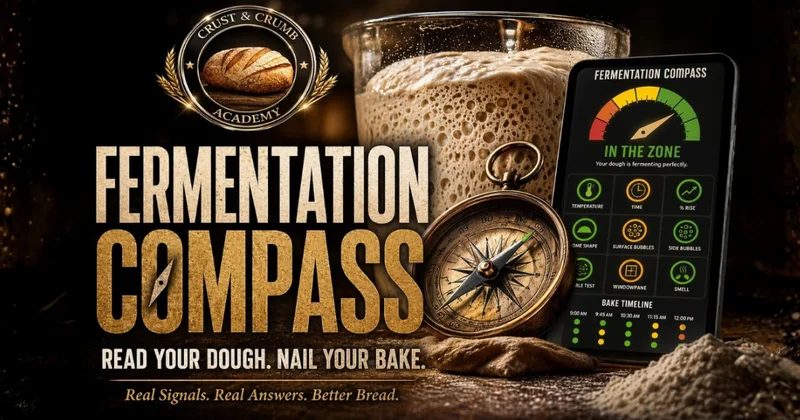
Free tools built to take what you're learning here and put it to work in your kitchen.
Tools for This Topic
Henry uses and recommends these tools